Tashi Delek!
Welcome
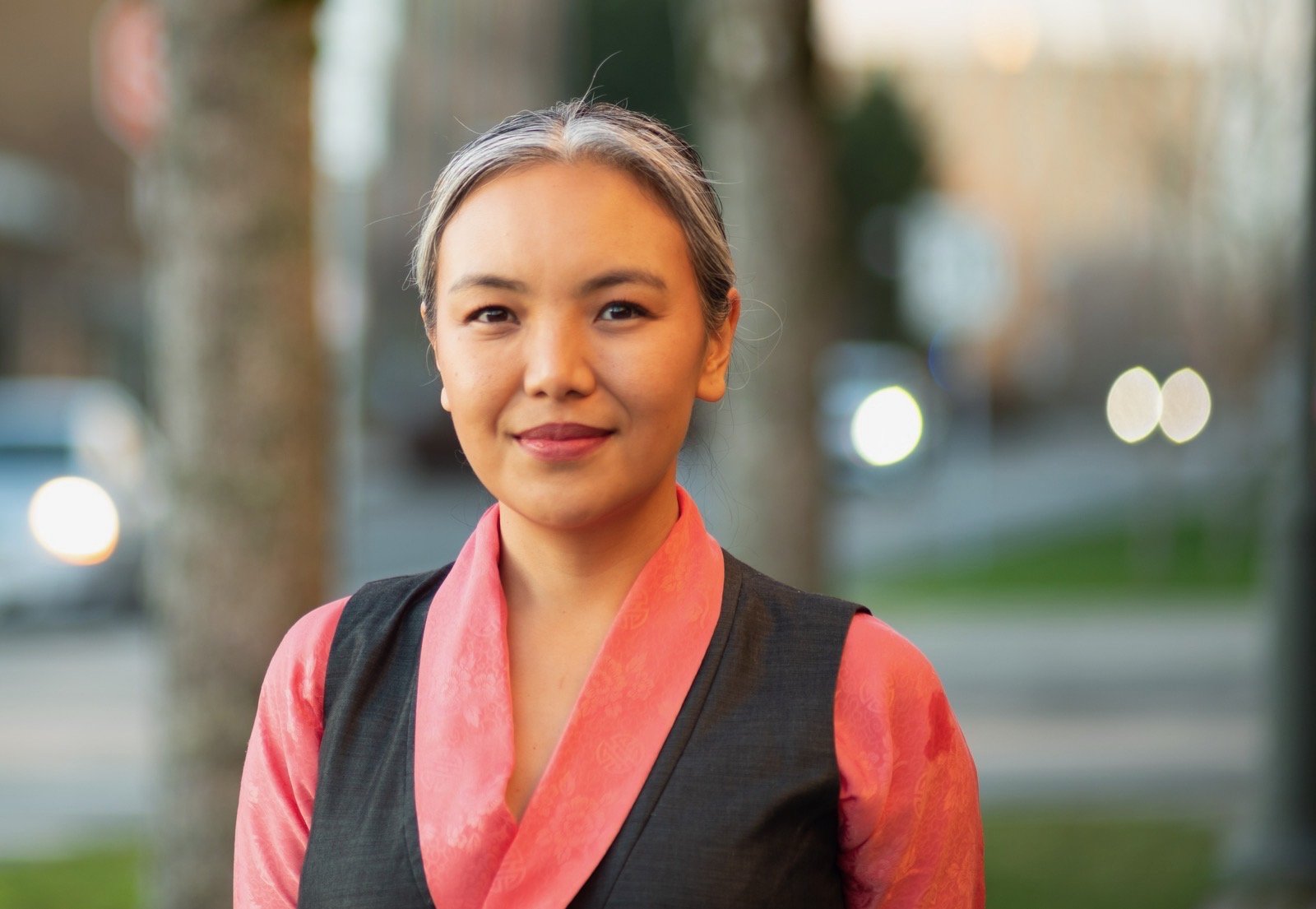
Hi. I’m Pasang.
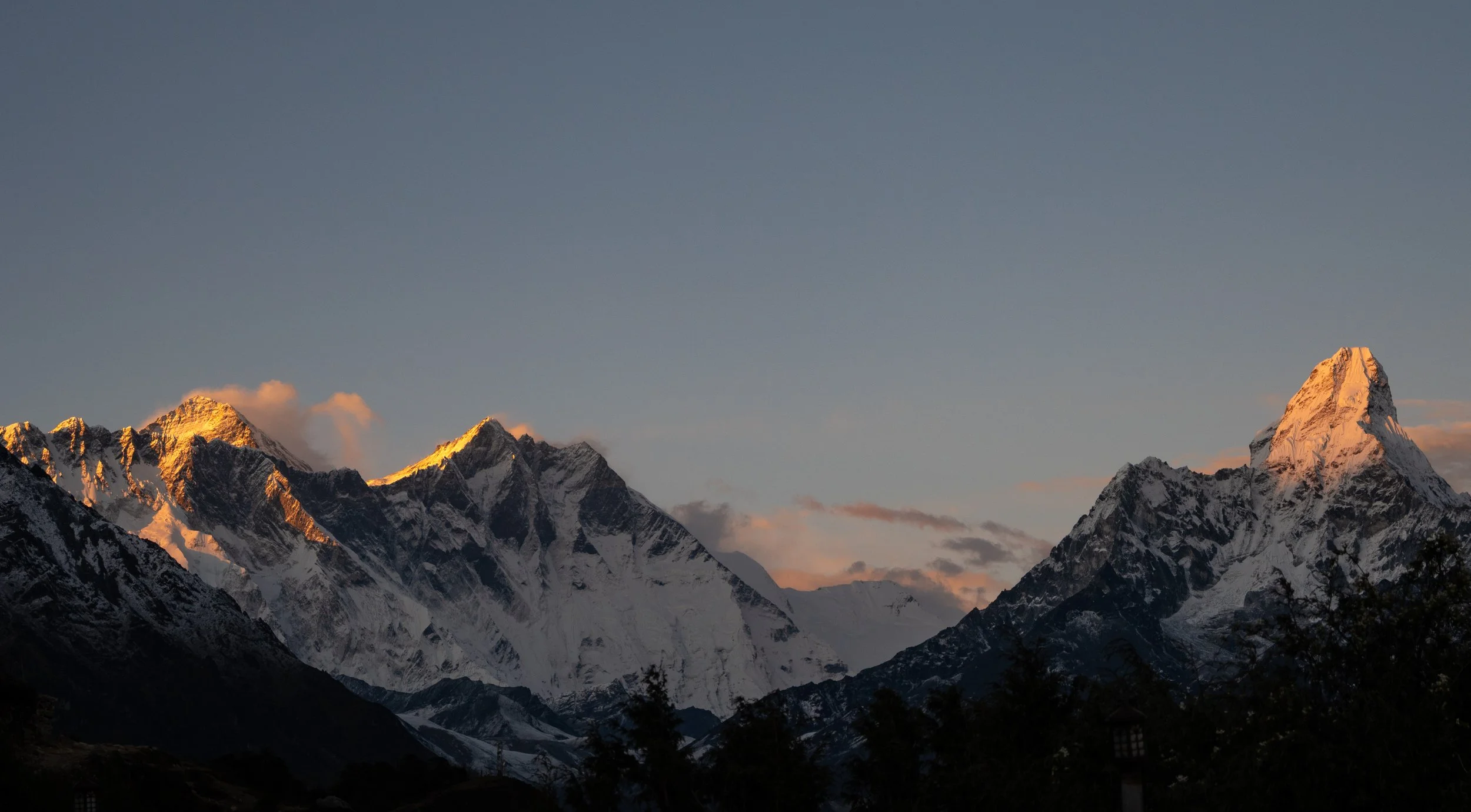
…Sherpa scholar from Pharak in northeastern Nepal (also known as Mount Everest region).
I believe that our sustainability as a Sherpa people in the wake of climate change depends on keeping our songs and stories about people, places and things alive for the next generation.
I am an Assistant Professor of Lifeways in Indigenous Asia at the University of British Columbia. I have been studying human dimensions of climate change and Indigeneity in the high Himalayas for the past two decades.
My research projects apply multidisciplinary approaches to exploring the possibilities of collective survival on warming planet. My research, writing and pedagogy are guided by the question: How do we live in the midst of dying?
I consider plural epistemologies as a necessity—not a choice—in addressing contemporary human problems.
My current collaborative projects include: Knowledge Justice Collective, Biodegradable Blessings and Ecologies of Care.
A complete list of my publications can be found here.
Latest Publication
Indigenous Peoples' Leadership in Environmental Science Assessments
Environmental science assessments are one of the major areas where Indigenous Peoples are calling for and beginning to establish their own activities. Different Indigenous-led groups have established multi-Indigenous assessments. In the experiences of the authors, it is extremely common for an Indigenous person, in a discussion about environmental science assessment, to call for the need for Indigenous-led assessments. Following the disastrous glacial lake outburst flood of 2024 in Khumbu (more commonly known as the Mount Everest region in Nepal), Sherpa community members from the region began their own climate change risk assessment process.
As with the STACC report, Indigenous-led assessments provide crucial confidence-building and training grounds for early-career scholars. Indigenous-led reports can also experiment with modes of expression that are novel, such as storytelling approaches, photography, video and animation, and different types of outputs intended to reach audiences that have different linguistic requirements and different expectations for how they are to receive critical information.
Whyte, K. and Sherpa, P.Y., 2026. Indigenous Peoples' Leadership in Environmental Science Assessments. In The Routledge Handbook of Values and Science (pp. 348-362). Routledge.
Read the chapter here.
MELTING ICE AND TRANSFORMING BELIEFS
Mountains and their ecosystems have been important to religious beliefs in many regions around the world. In this Viewpoint, researchers describe how climate change in mountain regions is interpreted by local communities and how they transform their spiritual practice in response to it.
Pasang Yangjee Sherpa: knowing glaciers. Following the United Nations 2025 International Year of Glaciers’ Preservation, it is a good time to reflect on how well we know glaciers, besides their volumetric measurements that illuminate the rapid melting of ice and snow in the Himalayas.
Allison, E., Ceruti, C., Muhumuza, M., Salas Carreño, G., Sherpa, P.Y. and Lizaga Villuendas, I., 2026. Melting ice and transforming beliefs. Nature Climate Change, 16(2), pp.118-122.
Access the article here.
recommendations for the ethical and equitable engagement of indigenous knowledge systems within the ipcc
Drawing on the core team’s direct experience across AR6, a comprehensive literature review, and three multilingual listening sessions conducted in December 2025, we begin by identifying five framing principles to form the foundation of an ethical and equitable engagement with Indigenous Knowledge Systems: (1) Knowledge and epistemic justice; (2) Self-determination and rights-based approach; (3) Indigenous frameworks for working across knowledge systems; (4) Relational, reparative, and non-extractive engagement; and (5) Temporalities of change. Using these principles, we introduce the current barriers and opportunities within the IPCC, and then propose concrete recommendations in three areas: (1) authorship and representation; (2) methodology and assessment frameworks; and (3) institutional transformation and accountability. (This report was peer-reviewed by eight leading Indigenous scholars and practitioners representing global regions: North America, Arctic region, Latin America, Asia, Africa and the Pacific.)
Sherpa, P.Y., Reed, G., Carmona, R., Chakraborty, R. (2026). Recommendations for the Ethical and Equitable Engagement of Indigenous Knowledge Systems within the IPCC. University of British Columbia, Assembly of First Nations, International Work Group for Indigenous Affairs and Tohu Indigenous Analytics.
Access the article here.
Public
‘OUR SURVIVABility IS AT STAKE’
Sangita: What is at stake if we continue to disregard inequalities and different ways of understanding socio-ecological relations, loss, and climate change?
Pasang: Our collective survivability is at stake. For example, Chief Ninawa Huni Kui from the Amazon has warned us of the mass extinction in slow motion. (4) When we disregard inequalities and different ways of understanding socioecological relations, loss, and climate change, we are privileging the same systems and structures that brought us to this present moment of climate and nature emergency. Within the existing structures, the vulnerable groups keep growing, while the groups who are considered safe are contracting. During the COVID-19 pandemic, for example, some individuals and groups did fine, and some even profited financially, as their needs were met. Yet, who was serving those needs and at what expense? People experience different kinds of vulnerabilities, and we need to understand that.
Sangita: What makes you hopeful?
Pasang: What makes me hopeful is knowing that there were many who came before us, many who are with us and many who will come after us in working towards making a just, livable planet for all. This knowledge is based on an acknowledgement of our responsibility to care for each other, whether in the human form or not. It is about knowing our relationship to each other and honouring it. I am hopeful because of the tireless effort of Indigenous leaders, scholars, and intellectuals who have shown us the pathways to creating the future I want to see for my children and grandchildren. My commitment to keeping our Sherpa songs and stories alive for the next generation gives me hope.
A conversation between Sangita Thebe Limbu and Pasang Yangjee Sherpa. Published in ALERT Autumn 2023.
Hard rain is already falling
Latest scientific assessments show that even if global warming is limited to 1.5C, warming in the Himalayas is going to be higher than the global average. Glaciers are projected to melt at an even faster rate than previously predicted. Living with the looming threat of a glacial lake bursting its banks is a reality.
…..
Climate sciences pursue the quantifiable. And so, climate change discussions at the policymaking level have fallen short of recognizing the uncertainties Himalayan people face.
For those experiencing climate change in the high mountains, uncertainty comes not only from unpredictable rain patterns, but from not knowing who − in the physical world and other worlds − can provide stable ground.
From the essay published in The World Today (October 2021). Read the essay here.
MOUNTAIN AS METAPHOR: A FUTURE OF MULTIPLE WORLDVIEWS
A mountain is a metaphor. To imagine a future of alpinism is to imagine the kind of future we, collectively as global citizens, want to create on and off the mountain. The gift of history offers us an advantage. The knowledge we have inherited orally or textually shows us what to leave behind and what to take forward. Each of us has a choice to make. I dream of a future that is just and fair. What would that be like? This question cannot be answered without coming face-to-face with our present reality.
…..
In the future, I hope alpinism is able to project multiple worldviews together at once—not as a competition to establish a hierarchy, but as a way to learn from each other and to treat everyone with dignity. I hope alpinism is not just about stepping on the mountain, but about strengthening our relationship with it and with each other. I hope that the mountains are not reduced to commodities for sale; that we are able to see and hear the people whose labor makes the mountaineering tourism industry possible; and that we recognize that they are indispensable, not disposable.
From the essay published in Alpinist Magazine 75 (Autumn 2021). Read the whole essay here.